
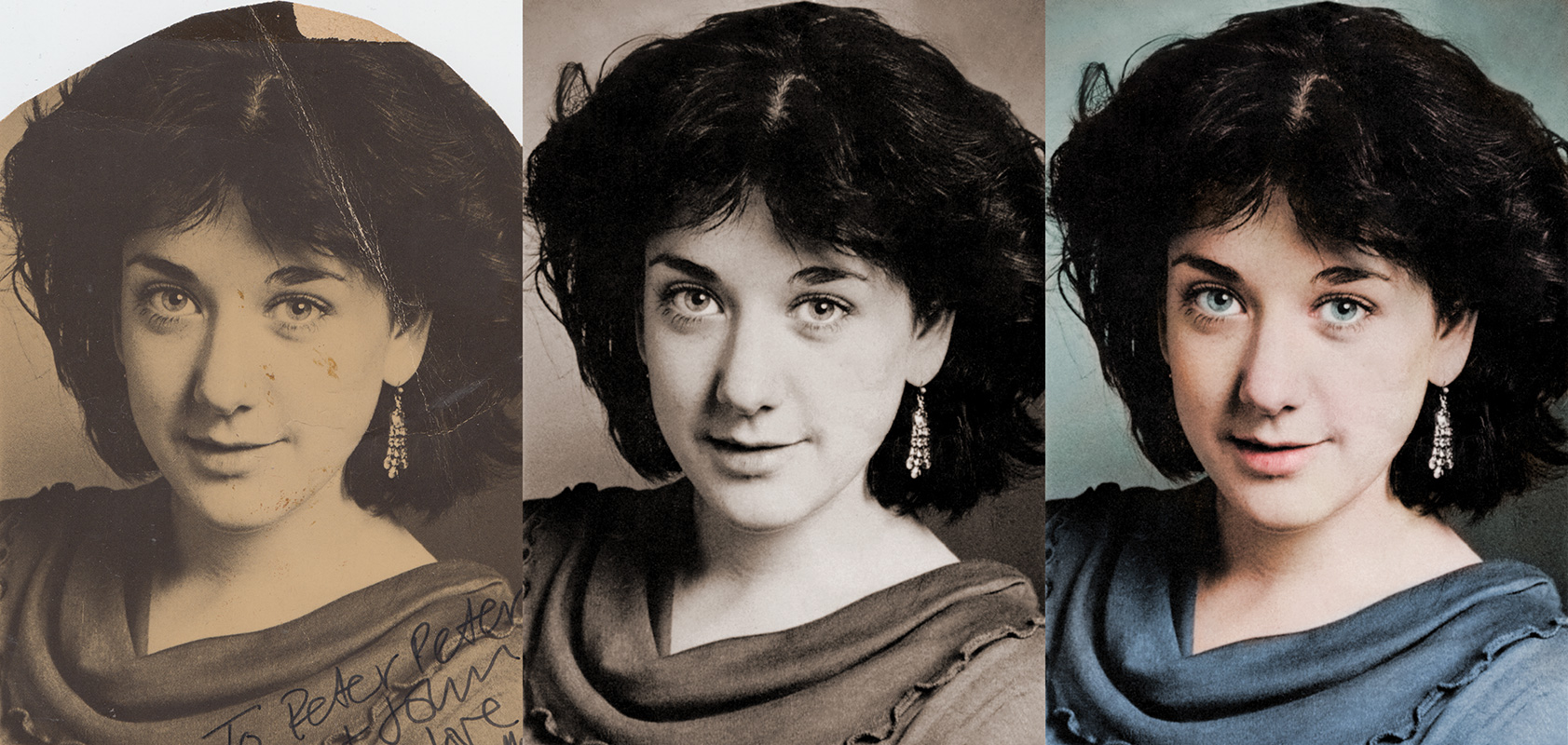
This photograph was a poor reproduction of an undoubtedly much higher-quality original, and exhibited numerous flaws. The reproduction was clearly not intended for professional use, even if the original image from which it was duplicated, was. Amongst these flaws were muted contrast, stains, creases, handwriting, tears, a rudimentary cutout which removed portions of hair at the top of the image and a dotted print texture introduced at the time of reproduction.
The first objective was to repair the damage that had befallen the photo - and the result of that restoration can be seen in the middle image. As a secondary step, hand-painted colourisation was added.
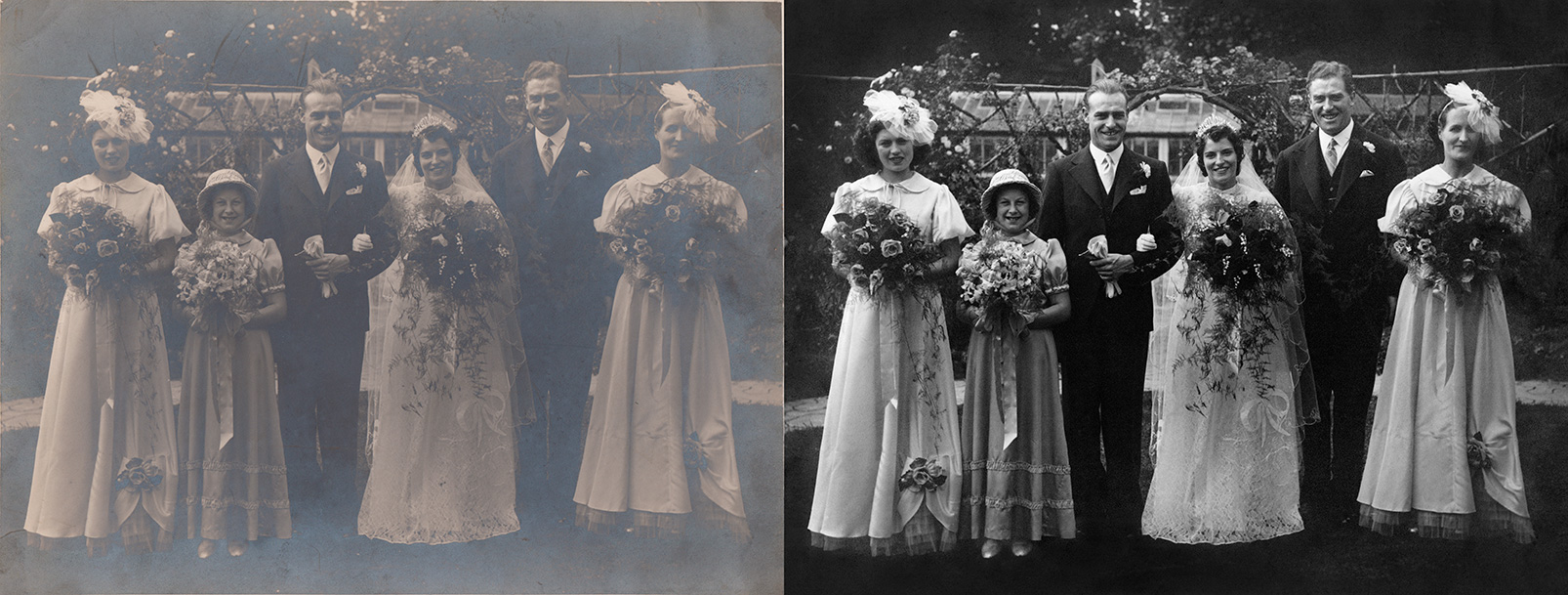
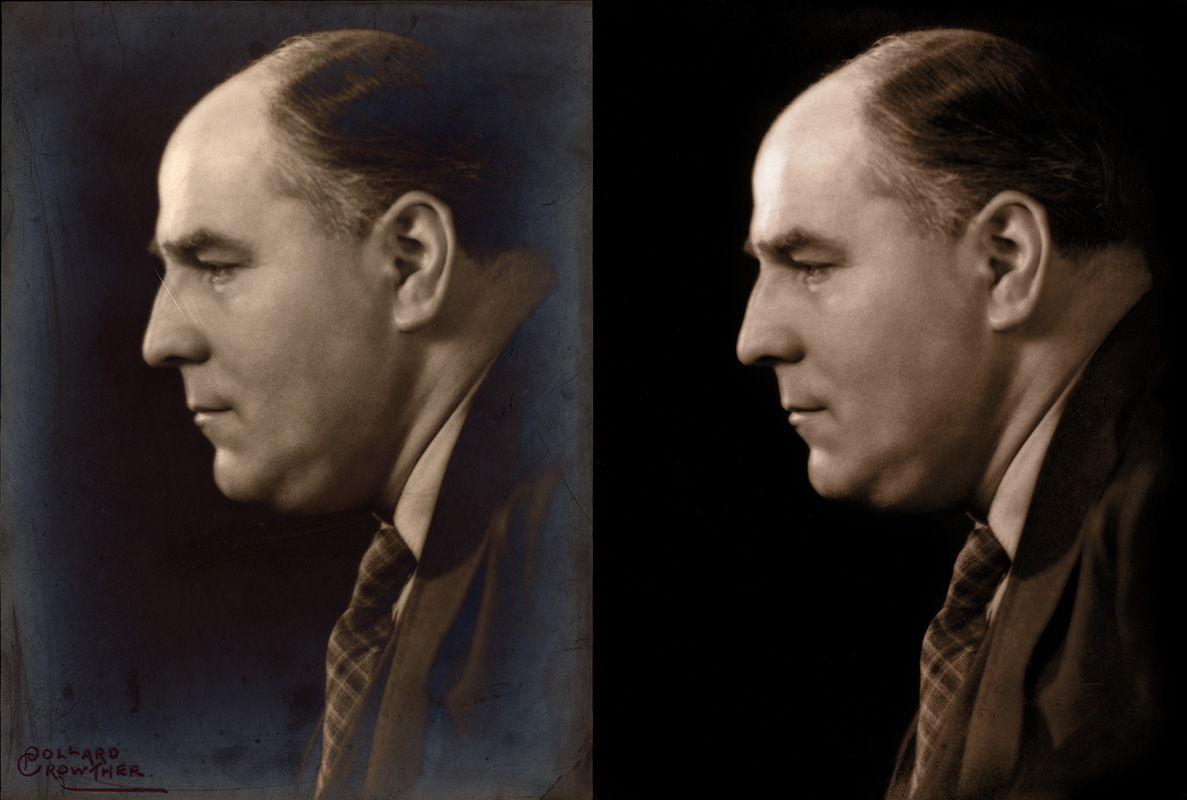
The two photos above suffered from a mutual ailment: Silvering.
During the restoration process, particular care must be taken to isolate the areas of the image that have begun to silver and restore them while preserving the underlying details - the shadows being the most dramatically affected. An inadequate restoration might simply entail painting over the most silvered areas in order to mask the symptoms, but the best results are gleaned when the underlying details can be restored.
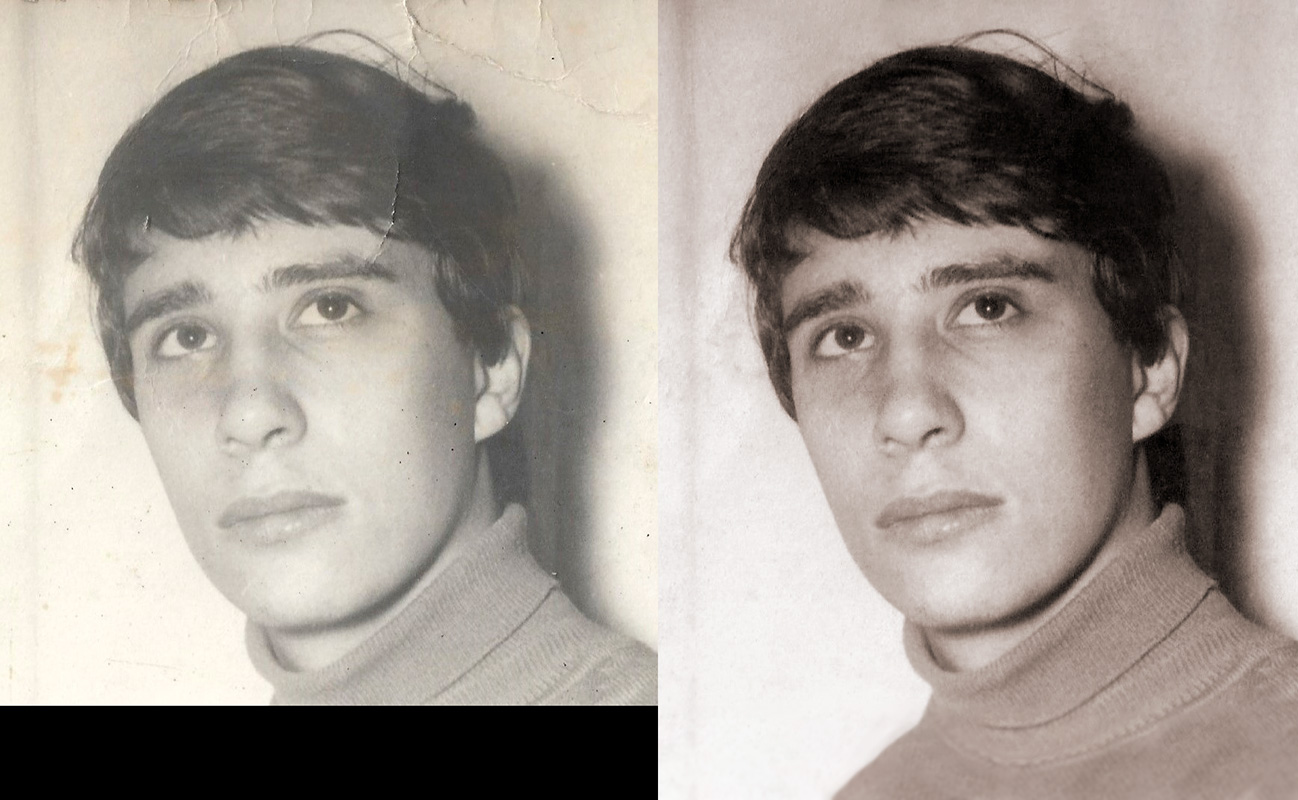
This photograph has a number of minor issues that are quite easy to correct (creases, spots and stains). Unfortunately, it also includes one significant problem: The lower portion of the image has either been over-cropped at the time of digitization, or Michael was originally photographed quite low in the frame - meaning that the overall composition of the image appears to be flawed.
In order to remedy this issue, I recreated the lower portion of the image by hand, drawing in the jumper and making a few assumptions about how it might have looked. Once completed, the restored image could now retain the traditional 10x8 proportions that were required - and we were able to accomplish this goal without cropping the image further.
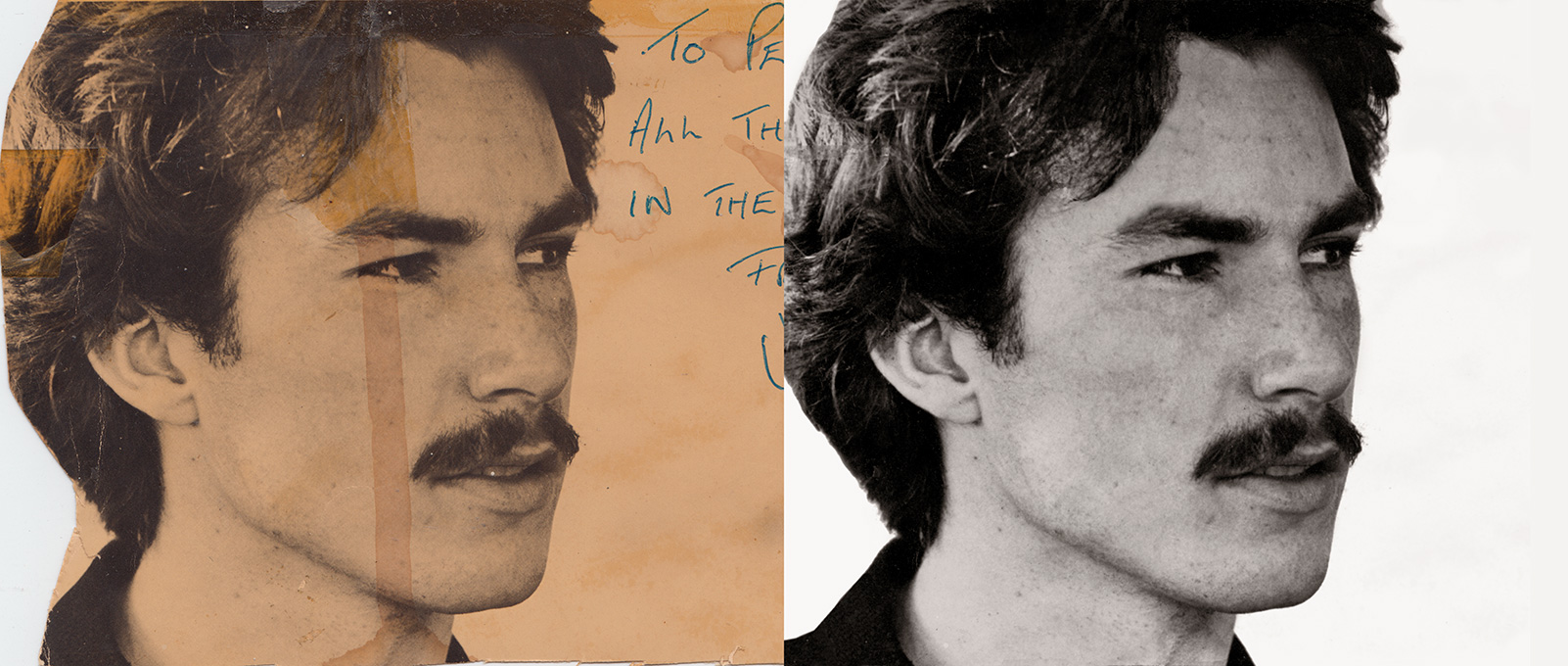
Amongst other issues, this photograph exhibited some moderate staining - seemingly from spilled fluid and tape residue.
Extra care and time is required to tackle these issues when they appear over areas of important detail - such as eyes and faces. In contrast, the handwriting in this photograph appears exclusively over a plain background - and because of this, that can be removed effortlessly.
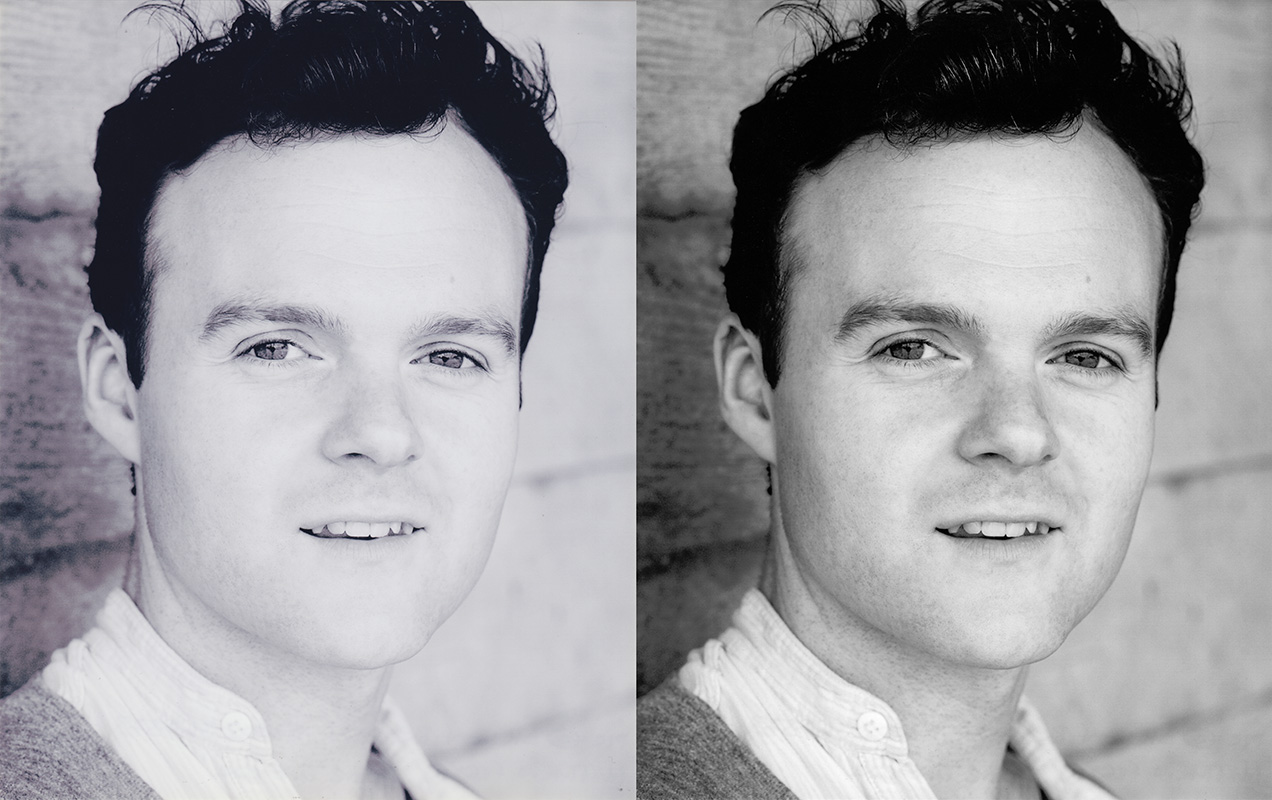
In this example, the tonal range of the skin is extremely flat.
Thankfully, much of this detail was still present in the photograph and could be easily pulled down and restored. This is an adjustment that can often be made in a short amount of time - though requires a high quality scan for the best results. Not all photographs retain this detail when over-exposed, so results will depend on the image (and the scan). Indeed, unlike the highlights, tonal range in the shadows was not well preserved in this example - which is apparent when you look closely at the hair, which appears fairly flat and black. This limitation was offset by nevertheless enhancing what detail could be found in the shadows.